During a heat wave, the pool water seems to transform within a few days: the colour changes, the chlorine smell intensifies, the chlorine evaporates and the water level drops. It’s not your imagination, nor a defect in your pool. It’s the water chemistry reacting directly to extreme heat.
When the water temperature exceeds 28 °C, chlorine evaporates up to two to three times faster than at 22 °C, the pH tends to rise, and conditions become ideal for algae to appear. Here’s what happens and how to adjust your pool maintenance routine, to get through the heat wave while keeping crystal-clear water that’s perfect for swimming.
Why does heat accelerate chlorine evaporation?
Chlorine is a volatile oxidizing agent. The hotter the water and the more intense the UV rays, the faster it dissipates. In practice, at 30 °C, chlorine consumption can double compared with a day at 22 °C. If you add to that a heavily used pool (heat waves naturally drawing in swimmers), chlorine needs can triple within a few days.
Concretely: the weekly dose that was enough in June is no longer enough in July during a heat wave. Testing the water every two days, rather than once a week, lets you correct the situation before losing control of it.
The effect of more frequent swimming during hot spells
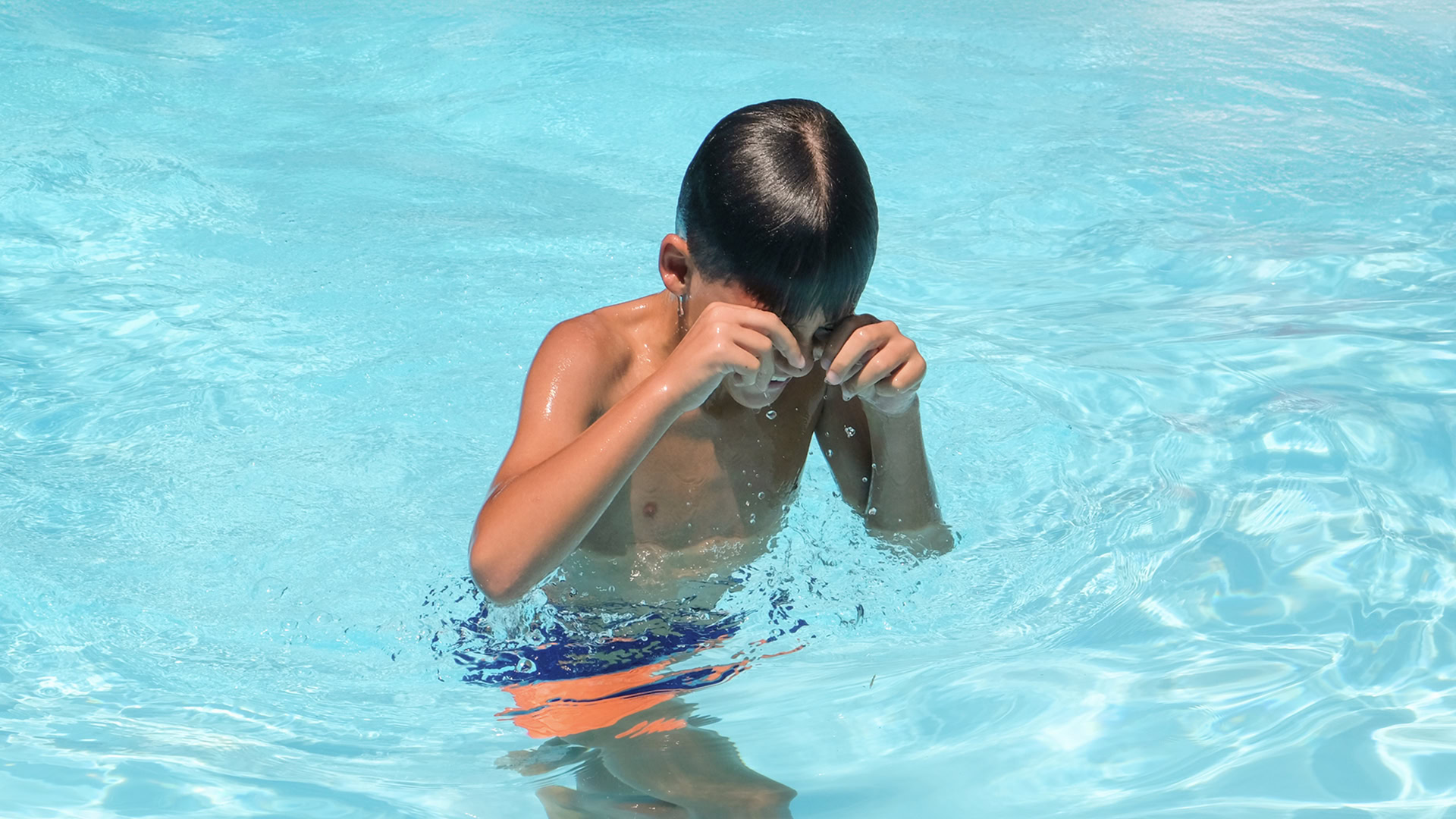
A heat wave draws more people into the pool, and each swimmer introduces sweat, sunscreen, body oils and sometimes hair-product residue into the water. These inputs consume the available chlorine and promote the formation of chloramines, the compounds responsible for the typical chlorine smell and stinging eyes. A quick shower before swimming and a weekly shock treatment are enough to neutralize these residues.
Why does pool water turn green in summer?
Algae appear when three conditions come together: heat, intense light, and an insufficient chlorine level. A heat wave provides the first two right away. So if the chlorine drops below 1 ppm, even temporarily, algae can move in within 24 to 48 hours. Water that turns milky, walls that feel slimy to the touch, or a greenish tint in the corners are the first signals of this transformation. To understand all the discomforts that come with unbalanced water, see our article on the symptoms caused by water you’re losing control of.
pH variations during heat waves
Heat quickly drives up the pH, especially in saltwater pools or those with UV systems. A pH that climbs above 7.8 reduces the effectiveness of chlorine: at 8.0, chlorine is about 25% less effective than at 7.4. You can thus get correct chlorine readings on a test and still see water degrading, simply because the chlorine present is no longer doing its job.
Reference ranges to aim for during a heat wave:
- pH: 7.2 to 7.6 (ideally 7.4)
- Total alkalinity: 80 to 120 ppm
- Free chlorine: 2 to 3 ppm (a little higher than in a normal season)
- Stabilizer (cyanuric acid): 30 to 50 ppm for uncovered chlorine pools
How to adjust your routine during a heat wave
Four simple adjustments are enough to get through a heat wave, without major problems for your pool water:
- Lengthen the filtration time. Go from 8 to 10 hours a day to 12 to 14 hours, ideally with a period in the afternoon when the water is hottest.
- Test more frequently. Every 48 hours rather than once a week. Test strips or a liquid kit give a sufficient picture.
- Adjust the chlorine upward. Aim for the high end of the target range (3 ppm rather than 1.5 ppm).
- Cover at night if possible. A solar cover at night reduces evaporation and limits chlorine loss. To assess whether a cover is worth the investment, see our article on the real benefits of a solar cover.
The dropping level: evaporation or a leak?
In a heat wave, an in-ground pool typically loses between 1 and 3 cm of water per week from pure evaporation, and more if the winds are strong. A loss beyond 5 cm in a week without rainfall, or soggy ground around the pool, signals something other than simple evaporation.
The signs that require professional intervention
If the water stays cloudy despite a shock treatment and 48 hours of extended filtration, if swimmers’ eyes sting constantly, or if you add products without seeing any effect, the problem is probably no longer purely chemical. Very often, it’s the filtration or the pump struggling to keep up, or the cell of a salt system weakening. At this stage, a professional diagnosis spares you the purchase of costly products.
“Heat waves are one of our busiest periods. What we see is rarely a new problem: it’s an imbalance that had been building since spring and that the heat causes to burst. One timely visit, and we put the pool back in order, before it costs the owner too much.”
– Tristan Dufour, owner and pool expert, Piscine Évolution
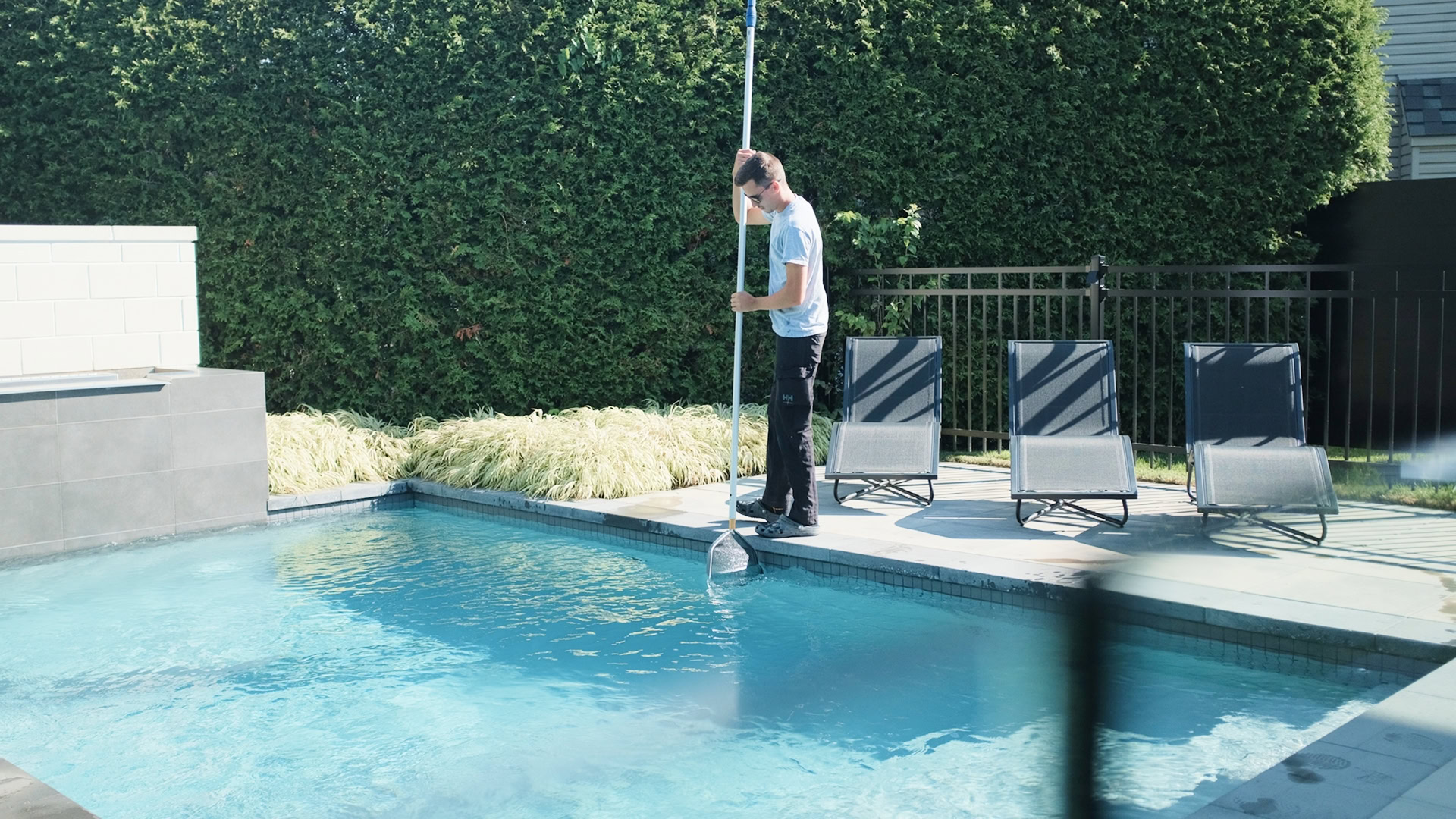
Crystal-clear water, even in the middle of a heat wave. A heat wave shouldn’t deprive you of your pool just when you need it most. If the water chemistry escapes you and you’d rather not spend your evenings on it, our weekly maintenance team can adjust it for you according to weather conditions, monitor the filtration and step in before the situation deteriorates. Request an estimate for weekly maintenance, and keep your pool ready for swimming all summer long.