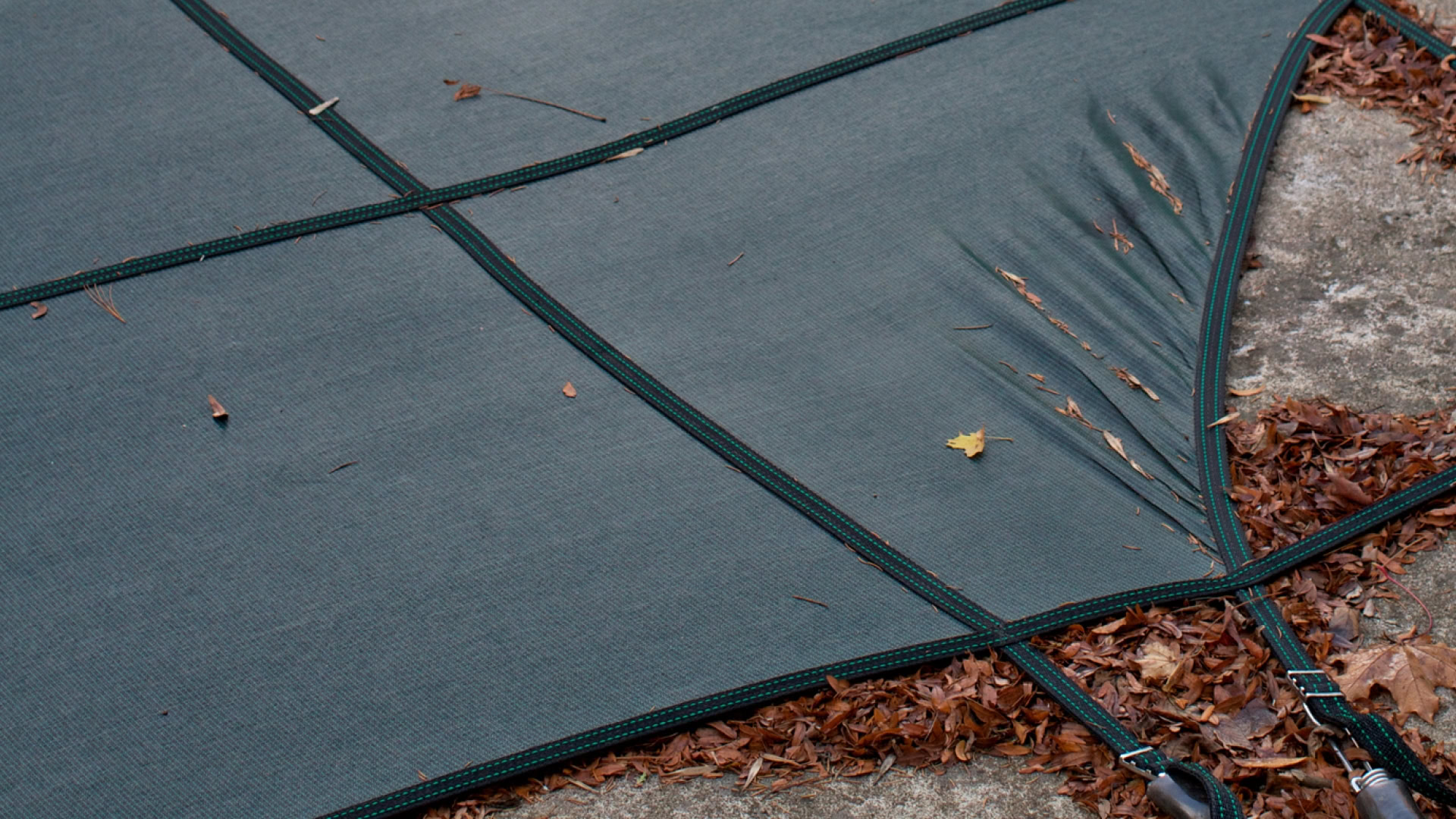
The nights are getting cooler and cooler, no one has set foot in the water for at least two weeks, and the pool isn’t scheduled to close for another month. This question comes up every year around this time: Can we just leave the pool as is until then?
The answer is no. But you also don’t have to maintain it as regularly as you did in July. At the end of the season, maintenance is reduced, but it doesn’t stop. This distinction makes all the difference, because a pool that’s been neglected for six weeks before closing will make this process more complicated than if it had been maintained moderately right up until the end.
Why a pool that’s no longer in use still requires maintenance
It’s not just swimming that causes water quality to decline. Swimmers introduce lotions, sweat, and hair into the water, but these aren’t the main sources of what your filter captures. Even when not in use, your pool continues to collect rain, pollen, dust, insects, and—starting in September—an abundance of fallen leaves.
The difference is that no one is keeping an eye on it anymore. In July, water that turns green is noticed the very same day. In September, you might not notice it until three weeks later, by which time the bottom has already changed color.
Water temperature, however, works in your favor: algae grow more slowly in cold water, and the disinfectant is used up less quickly. This is precisely why maintenance can be scaled back. But “scaling back” doesn’t mean “stopping everything.”
What to Reduce, What to Maintain, What to Monitor
Here’s the breakdown that applies until closing time.
| What to Reduce | What to maintain | What to monitor |
| Daily filtration time | Water circulation, every day | The pressure reading on the filter gauge |
| How often to scrub the walls | Water balance (pH, alkalinity) | Flow rate at the return lines |
| Disinfectant dosage | Emptying the skimmer and pump baskets | Unusual noises from the pump |
| Frequency of water testing | Removal of floating debris from the surface | Water level |
Here’s a simple rule to remember: anything related to circulation should be maintained, while anything related to swimming comfort can be reduced.
Circulation keeps your chemicals working
This is the point that most pool owners underestimate at the end of the season.
A disinfectant only protects the water it reaches. In a pool where the water is moving, it spreads throughout the pool and does its job in the corners, under the steps, and all the way to the bottom of the deep end. In a pool where the water is stagnant, it remains concentrated near the return jet and leaves entire areas unprotected. That’s where discoloration begins—almost always in the same spots.
In other words, turning off the filtration system to save money doesn’t just put maintenance on hold. It also negates the effect of the products you’ve already paid for and added to the water, which amounts to wasting significant amounts of money.
Emptying the filter baskets: the most practical step in the fall
If you had to keep just one habit between now and closing day, this would be it.
A skimmer basket filled with leaves lets only a fraction of the water through. Meanwhile, your pump continues to run at full power. It’s working against resistance, so the flow rate drops throughout the entire system, and the filter no longer receives enough water to do its job properly. You end up with a system that’s running, consuming energy, and filtering almost nothing.
“In the fall, half the problems people describe to me over the phone can be solved by emptying the baskets in the skimmer and the filter. People think their pump is losing power. But the problem isn’t the pump—it’s what’s in front of it.” — Tristan Dufour, owner, Piscine Évolution
Check both: the skimmer basket and the filter basket. The latter is more often overlooked because you have to open the lid to access it.
When to Start Slowing Down for Good
The benchmark we use in the field is water temperature rather than the calendar date. When the temperature consistently reaches 15 °C, biological activity in the pool slows down enough that filtration can be safely reduced. Above this threshold, a pool is still a pool, even if no one is swimming in it anymore.
The calendar, on the other hand, can be misleading. A mild late September can keep the water at 20 °C, and a cool early September can cause the temperature to drop below that threshold in just a few nights.
Three signs that call for action before closing
- The filter pressure has risen and does not drop back down after a backwash. This is a sign that the filter is clogged or that the system is partially blocked.
- The water has become cloudy or has changed color, even slightly. Water that loses its clarity at the end of the season won’t clear up on its own in the cold, and it becomes more difficult to close the pool.
- The water level is dropping faster than before. Evaporation slows down in cold weather, so a rapid drop in the fall warrants a check [See the article “Your Pool Is Losing Water: Leak or Evaporation?”].
Frequently Asked Questions
No, not before closing the pool. You can reduce the daily runtime as the water cools, but circulation must continue. Stagnant water leaves areas without disinfectant and makes closing the pool more difficult.
Yes, but at a lower dose. The disinfectant isn’t just for swimmers—it also neutralizes what rain, wind, and leaves bring into the pool.
Generally not, especially if the water was balanced to begin with. Test the water, empty the filter baskets, let the filter run longer for a few days, and keep an eye on it. This is a common catch-up task at this time of year.
Closing it too early, while the water is still warm, causes more problems than it solves: the pool spends the winter with water that has had time to deteriorate under the cover. It’s better to do minimal maintenance and close the pool at the right time.
What you can do starting this week
Empty both baskets, test the water, adjust the pH, and note your filter pressure. This starting number will serve as a benchmark until closing time. Three simple steps that will only take a few minutes. If you’d rather not have to think about it at all, that’s exactly what our end-of-season maintenance service covers: we take over until closing time, and then we close a pond we’re already familiar with. You can contact us for a quote, or book your closing service directly.ront que quelques minutes. Si vous préférez ne plus y penser du tout, c’est exactement ce que couvre notre entretien de fin de saison : nous prenons le relais jusqu’à la fermeture, et nous fermons ensuite un bassin que nous connaissons déjà. Vous pouvez nous écrire pour une soumission, ou réserver directement votre fermeture.