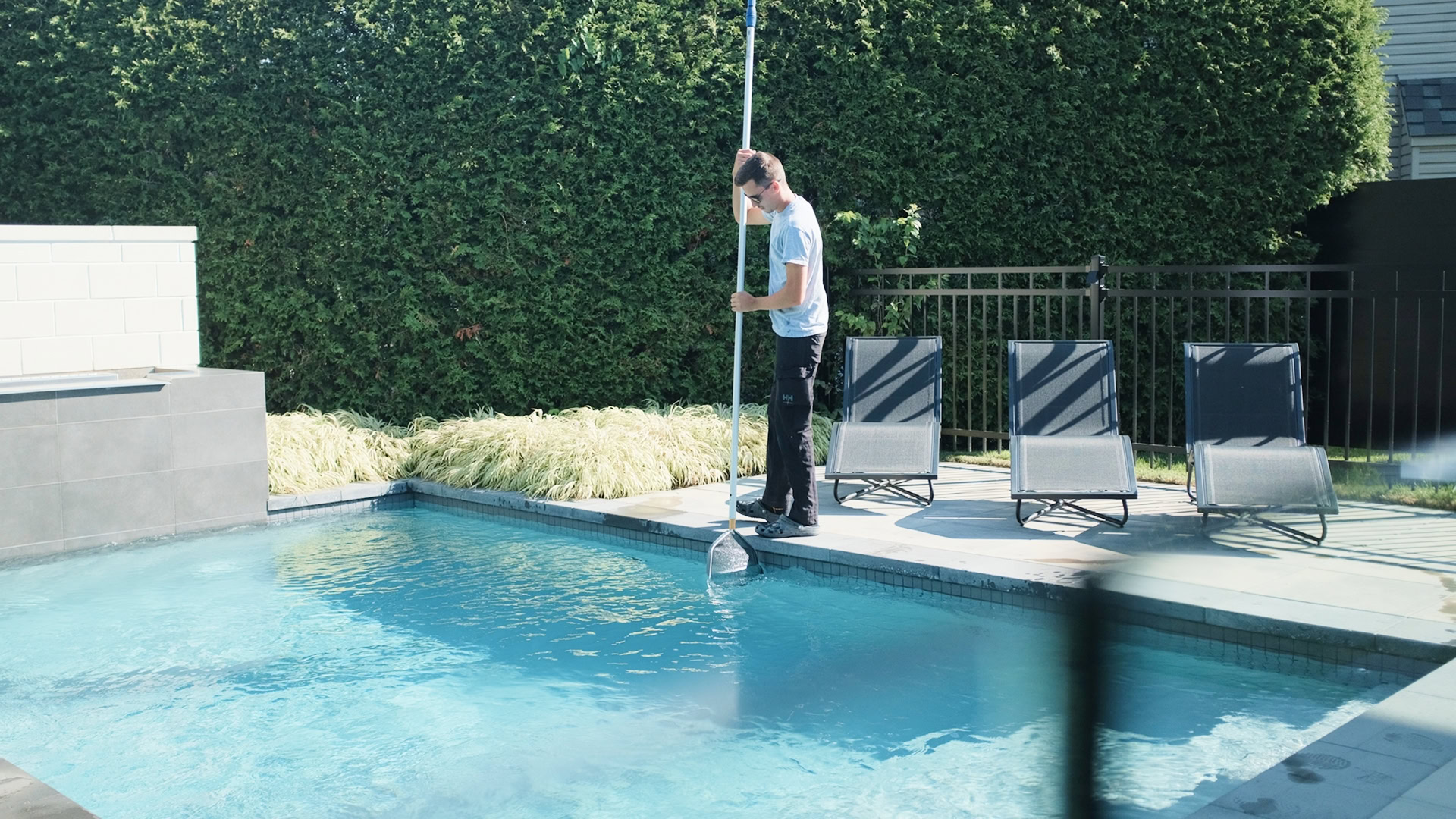
November is the worst month to enjoy a pool and the best time to decide what to do with it. Renovations planned in the fall are completed before the season opens; renovations decided in June are carried out in July, right in the middle of the season, so you’ll be unable to swim while the work is underway. Here are the six signs that indicate a decision is needed, and what each one means.
Why Decide Now Rather Than in the Spring
Three practical reasons—none of them related to urgency.
First, time to think it over. A decision made in November leaves months to compare options, plan, and budget. The same decision made in June has to be rushed because the pool is unusable in the meantime.
Next, availability. Spring is the busiest time of year for the entire industry, with new openings and urgent start-up needs. Fall and winter are quieter, both for us and for our suppliers.
Finally, access. The pool is already empty. Some projects are easier to prepare for when the pool isn’t in use.
Six Signs to Watch For
1. A liner that is discolored, hardened, wrinkled, or has been patched more than once
A liner ages visibly. It loses its color, especially at the waterline. It hardens and becomes brittle to the touch. It wrinkles at the corners and no longer regains its shape. And most importantly, it accumulates patches.
A well-maintained vinyl liner lasts about 10 to 15 years, according to Latham Pool, whose equipment we use to calibrate and measure liners. However, cracks, leaks, significant discoloration , or a loss of elasticity may warrant an earlier replacement.
What this means: Two repairs on the same liner are a sign that it’s time to consider a replacement rather than repairing it again.
2. Stains or a worn liner on a concrete pool
On a concrete pool, inspect the coating visually and by touch. Look for areas where the surface has become rough, stains that won’t come off with brushing, and spots where the paint is peeling or lifting.
What this means: A flaking coating cannot be fixed with repeated touch-ups. Applying epoxy requires a properly prepared pool, which takes time and a period when the pool cannot be used.
3. Faulty Lighting
A light that flickers, turns on only half the time, or has stopped working altogether. It’s a problem that’s easy to put off, because a pool can be used just fine during the day without lighting.
What this means: A problem with underwater lighting involves both waterproofing and electrical issues—two things that can’t be diagnosed simply by looking. It’s also the kind of job that’s much easier to do when the water level can be lowered without spoiling anyone’s fun.
4. Aging, noisy, or poorly organized plumbing
New noises, vibrations, leaking connections, or a utility room where no one knows what each valve is for anymore. This last point is more important than it seems: plumbing you don’t understand won’t shut down properly at the end of the season.
What this means: reorganizing the plumbing is the quintessential off-season task. It requires shutting off the water supply, which is unthinkable in the middle of summer.
5. Equipment That’s Hard to Control
A system you no longer use because it’s too complicated, a controller whose settings no one knows, or devices from different generations that don’t communicate with each other.
What this means: The problem isn’t always the equipment—it’s often the integration. An automation upgrade should be planned for the off-season, and the article on home automation explains when the investment is justified.
6. A project that’s been put off for two or more seasons
The heating system you wanted to add. The shade sail you talk about every spring. The automation system you mentioned last year.
What this means: A project that’s been postponed twice isn’t put off because of a lack of interest. It’s postponed because it’s never been evaluated in concrete terms, and a project without numbers can’t be decided upon. That’s precisely what an evaluation addresses.
“The best renovations we do are the ones decided in November. The homeowner has had time to look into everything, we’ve had time to prepare thoroughly, and their pool is ready in time for opening day. The same work decided in June cuts into part of their season.” — Tristan Dufour, owner, Piscine Évolution
How to Interpret the Signs Together
A single sign doesn’t necessarily mean major work is needed. It’s the accumulation of these signs that makes them necessary.
| What you’re observing | What it suggests |
| A single, recent sign | Have it inspected—nothing more. A targeted repair is often sufficient. |
| Two or three signs in the same system | The system is nearing the end of its useful life. Now is the time to weigh the options of repair versus replacement. |
| Signs of wear on multiple systems at once | The pool has likely reached an age where several components are reaching the end of their useful life at the same time. A comprehensive assessment helps you avoid paying for three separate service calls. |
Frequently Asked Questions
A well-maintained vinyl liner lasts about 10 to 15 years. In practice, the signs matter more than the age: a liner that’s hardened, discolored at the waterline, wrinkled at the corners, or patched in several places is nearing the end of its life.
The work is planned in the fall and carried out depending on the nature of the job, often before the pool opens for the season. The advantage of deciding now is that you have time to think it over and better availability than during peak season.
Yes. The initial estimate for a pool liner replacement is free, and its primary purpose is to assess your current situation. An estimate concluding that your liner still has several seasons left is a useful piece of information.
For a screen replacement, we provide a detailed quote within 48 hours of the assessment.
What You Can Do Before the Snow Falls
Walk around your pool with this checklist in mind and note what you observe. Take photos of the waterline, the corners of the liner, and the equipment room. These images will serve as a point of comparison and make any assessment faster and more accurate.
If two or more of these signs apply, the initial assessment for a liner replacement is free, and you’ll receive a detailed quote within 48 hours. For concrete pools, lighting, plumbing, or automation, contact us and we’ll assess everything in a single visit. Get a head start: it’s the best way to avoid having repairs cut short your swimming season in the spring.